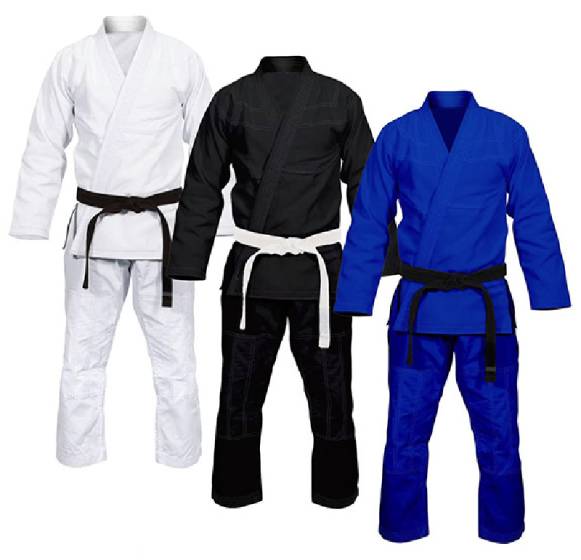
In Brazilian Jiu-Jitsu, a uniform is more than a requirement, it becomes part of a fighter’s daily rhythm, absorbing countless grips, scrambles and hours on the mat. Global athletes today are more informed than ever, paying close attention to how a gi feels after months of training, how it performs under pressure, and whether it meets competition rules without compromise. These expectations explain why Jiu Jitsu Uniform Manufacturers in USA (United States), like Kamalian Enterprises, continue to attract fighters and academies from around the world who value reliability as much as performance.
Consistency is a major reason why international athletes gravitate toward US-manufactured uniforms. Each batch is produced with close oversight, assuring that fabric weight, stitching strength, and fit remain uniform across sizes and repeat orders. Utilizing premium cotton blends, reinforced stress points and controlled shrinkage treatments aids in preserving the gi's structure through even the harshest usages.
Usually, the athletes and coaches give the feedback which then leads to innovation in manufacturing in America. Instead of focusing solely on aesthetics, manufacturers refine cuts, collar density, and sleeve tapering based on how fighters actually move and grip during live rolls. The result is a balance between comfort and resistance, light enough to stay agile, yet durable enough to survive hard training cycles.
For academies and private labels, standing out matters. This is where Custom Jiu Jitsu Uniform Suppliers in USA (United States) play a crucial role, offering flexible customisation without sacrificing quality control. From embroidery precision to patch placement and color consistency, customization is handled with a level of detail that supports long-term brand building. This service enables global gyms and distributors to uphold a professional image while providing athletes with uniforms they can trust.
Competing internationally comes with strict uniform regulations, and American manufacturers are deeply familiar with them. In fact, sleeve measures, lapel thickness, and the overall gi weight are specified by the federation and approved. That specific detail, of course, allows reassurance among fighters that their uniform will indeed pass inspection when it matters.
Beyond the product itself, dependable timelines and transparent production practices influence buying decisions worldwide. Structured manufacturing systems help assure consistent lead times, while ethical labor standards and responsible sourcing add another layer of trust. For international buyers, this reliability simplifies planning and lowers risk, especially when ordering in volume.
When fighters consider things beyond price, such as durability and performance, then the appeal is pretty straightforward. American manufacturers deliver uniforms that feel broken-in yet strong, compliant yet expressive and consistent from order to order. For global fighters and growing academies alike, choosing the USA is less about geography and more about knowing their uniform will show up ready every single time.